
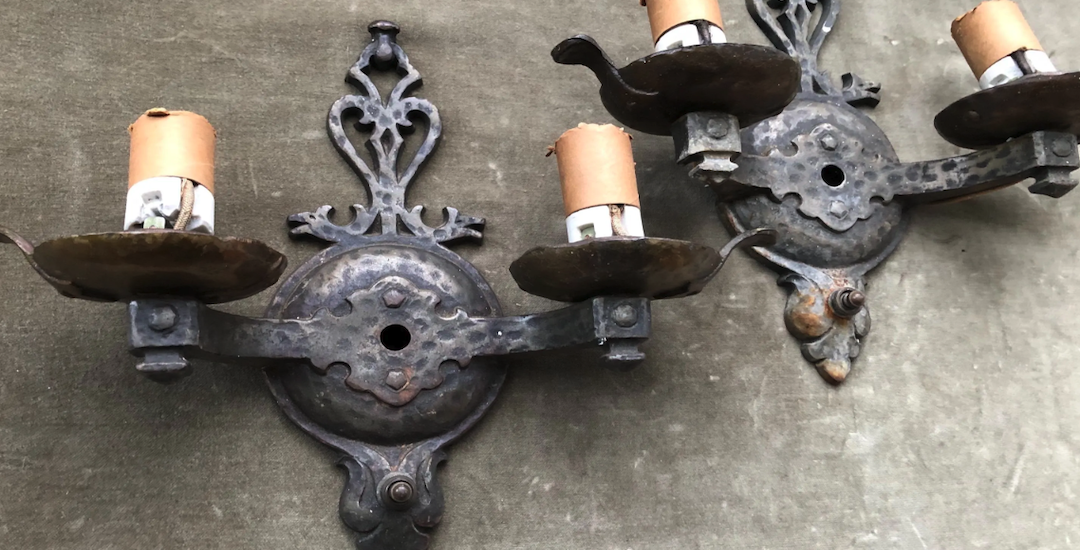
The “Vintage Charm: Antique Iron Mesh Wall Sconce” is a category of interior lighting fixture characterized by the use of woven metal wire, iron-based alloy frames, and a design philosophy rooted in early 20th-century industrial aesthetic traditions. While the term “vintage charm” functions as a marketing descriptor used by retailers to categorize these items, the underlying object is a modern reproduction or reclaimed utility light fixture intended for ambient or task lighting.
The development of the iron mesh sconce mirrors the broader evolution of lighting Hongfu during the Industrial Revolution. As factories and workshops required durable, high-visibility lighting, iron mesh became the standard for protecting delicate glass vacuum light bulbs from physical impact.
Roots in Industrial Utility
Before the rise of modern plastics, iron was the primary material for protective enclosures. The “cage” or “mesh” design was not intended for aesthetic appeal but for safety. In environments where heavy tools or debris were present, the wire enclosure acted as a shock absorber for the fragile filaments within incandescent bulbs.
Transition to Residential Décor
Following the post-war decline of heavy manufacturing in urban centers, domestic architectural trends began to integrate “industrial chic” elements. This shift reclaimed functional objects as design accents. The antique iron mesh wall sconce shifted from a factory tool to a stylistic choice, becoming, in essence, a relic of a bygone factory floor serving as a decorative centerpiece in a contemporary living room.
Material Composition and Construction Techniques
The physical longevity of an iron mesh wall sconce depends heavily on the materials used in production. Unlike mass-produced thin-gauge steel lighting, high-quality iterations utilize specific ferrous alloys meant to emulate late 19th-century hardware.
Metallurgy and Iron Alloys
Most sconces in this category are composed of wrought iron or cast iron. Wrought iron is noted for its fibrous internal structure, which provides a degree of tensile strength. Modern manufacturers often employ powder-coating or chemical patination to simulate the effects of oxidation that would naturally occur over decades of exposure to oxygen and moisture.
Woven Mesh Techniques
The mesh component is typically produced using cross-weaving or spot-welded wire techniques. The fineness of the mesh is a variable that dictates light dispersion. Tighter weaves create more dramatic, sharp-edged shadows—a visual metaphor for a silhouette cast against a prison window—whereas open-grid designs allow for fuller light distribution across a wall surface.
Design Archetypes and Aesthetic Categories
There is no singular “correct” design for an iron mesh wall sconce, but they generally fall into three distinct archetypes defined by their mounting structure and bulb housing.
The Goose-Neck Sconce
This design features a curved, stiffened conduit arm that holds the mesh-enclosed bulb away from the wall. It mirrors the design of desk lamps used in drafting rooms or assembly lines from the 1920s. Its primary function is to focus light downward, creating a concentrated pool of illumination.
The Flush-Mount Cage
Designed for proximity, the flush-mount variant sits directly against the wall. This style is often utilized in narrow hallways or entryways where protruding fixtures would obstruct flow. It acts as a structural anchor, visually grounding the wall in the same way a rivet anchors steel plating to a ship’s hull.
The Swing-Arm Mechanism
Some models incorporate a hinged arm, allowing the user to reposition the light source horizontally. This technical adaptability bridges the gap between static wall art and functional workspace task lighting, much like a lighthouse lantern sweeping the horizon to guide navigation.
Installation and Technical Specifications
Installing an iron mesh wall sconce requires an understanding of basic electrical protocols. These fixtures are generally hardwired directly into a junction box, though some plug-in versions exist for temporary residential setups.
Wiring and Electrical Standards
The internal wiring must comply with the National Electrical Code (NEC) or local regional equivalents. Because the enclosure is made of conductive metal, proper grounding is essential. If a live wire makes contact with the iron cage due to insulation decay, the entire fixture can become a hazard, necessitating a robust ground connection.
Bulb Selection and Photometrics
The choice of light source impacts the fixture’s functionality. Antique-style LED Edison bulbs are frequently paired with iron mesh sconces. These bulbs mimic the warm, golden hue of early incandescent filaments while providing the energy efficiency of modern solid-state electronics. The mesh acts as a secondary filter, softening the glare and preventing the bulb from appearing overly bright in a dim room.
Mounting Challenges
Because of the weight of iron, mounting a sconce requires more than surface-level drywall anchors. The fixture must be secured to a wooden stud or a heavy-duty electrical box rated for the fixture’s weight. Failing to anchor the unit correctly is akin to planting a tree in loose sand; over time, the weight will cause the fixture to sag or pull away from the mounting surface.
Maintenance and Long-Term Durability
Like any piece of functional hardware, an iron mesh wall sconce requires periodic attention to remain both safe and visually consistent.
Oxidation and Rust Management
For many owners, “vintage charm” implies a certain degree of weathered appearance. However, unchecked oxidation can compromise the structural integrity of thin wire mesh. If the sconce is installed in an environment with high humidity, such as a bathroom, iron rust is an inevitable outcome. Applying a clear matte sealant can prevent corrosive flaking while maintaining the desired matte texture.
Cleaning the Mesh
The mesh design presents a specific cleaning challenge: the accumulation of dust within the small apertures. A synthetic duster is rarely sufficient. Professional maintenance usually involves a soft-bristled brush or compressed air to dislodge fine particulates. If one treats the mesh as an intricate spiderweb, they avoid the risk of bending the wire frames during the cleaning process.
Electrical Component Longevity
Light sockets, particularly those made of phenolic plastic or brass, eventually degrade due to the heat generated by the bulb. If a homeowner notices flickering or a burning smell, the socket must be replaced. The irony of these fixtures is that while the iron cage may last for several centuries, the electrical internals rarely endure beyond two decades of regular operation.
Theoretical and Cultural Significance
The enduring popularity of the iron mesh wall sconce reveals a broader cultural current: a fascination with the tactile reality of the physical world in an increasingly digital society.
The Appeal of the Tangible
In an era dominated by smooth glass surfaces and touch-sensitive electronic interfaces, the iron mesh sconce serves as a sensory counterpoint. Its rough surface, heavy density, and mechanical appearance provide a sense of permanence. It is a material connection to an era where objects were built to be repaired rather than replaced.
The “Industrial Chic” Paradigm
Design critics often argue over the authenticity of this aesthetic. Critics of the style claim that mass-producing weathered iron fixtures is a hollow mimicry of genuine industrial history. Conversely, proponents argue that the design serves as a tribute to the craftsmanship of the early 20th century. Regardless of the ideological debate, the sconce functions as a bridge that allows contemporary homeowners to incorporate a piece of historical narrative into a domestic space.
Symbolic Utility
The iron cage acts as a metaphor for control—the taming of a wild, electrical force behind a rigid, calculated grid. By placing a bulb—the quintessential icon of an idea—inside a cage, the user effectively frames the light. It suggests that while the energy provided is expansive, it can be directed and contained to serve a specific purpose within the household. Such fixtures do not merely shine; they define the parameters of the space they occupy, creating a boundary between the illuminated zone and the surrounding shadows.
In summary, the vintage iron mesh wall sconce represents the intersection of electrical utility and historical nostalgia. Its construction, while rooted in the pragmatic requirements of 20th-century industry, continues to provide a distinct aesthetic and functional utility in modern architecture. Whether acting as a stark ornamental piece or a functional task light, the fixture demands respect for its material composition, electrical requirements, and the legacy of the industrial age it reflects. For those integrating such pieces into a home, careful attention to structural mounting and appropriate light source selection ensures that the objective of both form and function is achieved with longevity.